
Knowledge Hub Bulletin 37 - March, 2026
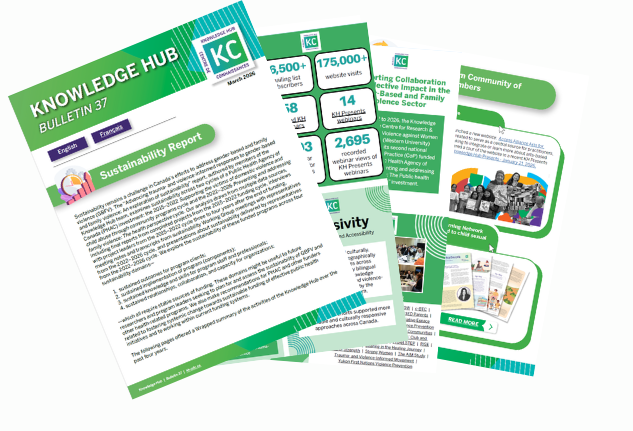
2022-2026 Trauma- and Violence-Informed Community of Practice: Wrapped
Supporting Collaboration and Collective Impact in the Gender-Based and Family Violence Sector
From 2022 to 2026, the Knowledge Hub at the Centre for Research & Education on Violence against Women & Children (Western University) facilitated its second national Community of Practice (CoP) funded by the Public Health Agency of Canada’s Preventing and addressing family violence: The Public health perspective investment. The CoP included 48 researchers and practitioners from 24 projects working in trauma- and violence-informed gender-based and family violence (GBFV) prevention across Canada.
COMMUNITY OF PRACTICE REACH - National Scope and Shared Learning
The Community of Practice (CoP) offered opportunities for learning and collaboration among projects responding to gender-based and family violence (GBFV) in diverse regional and community contexts.
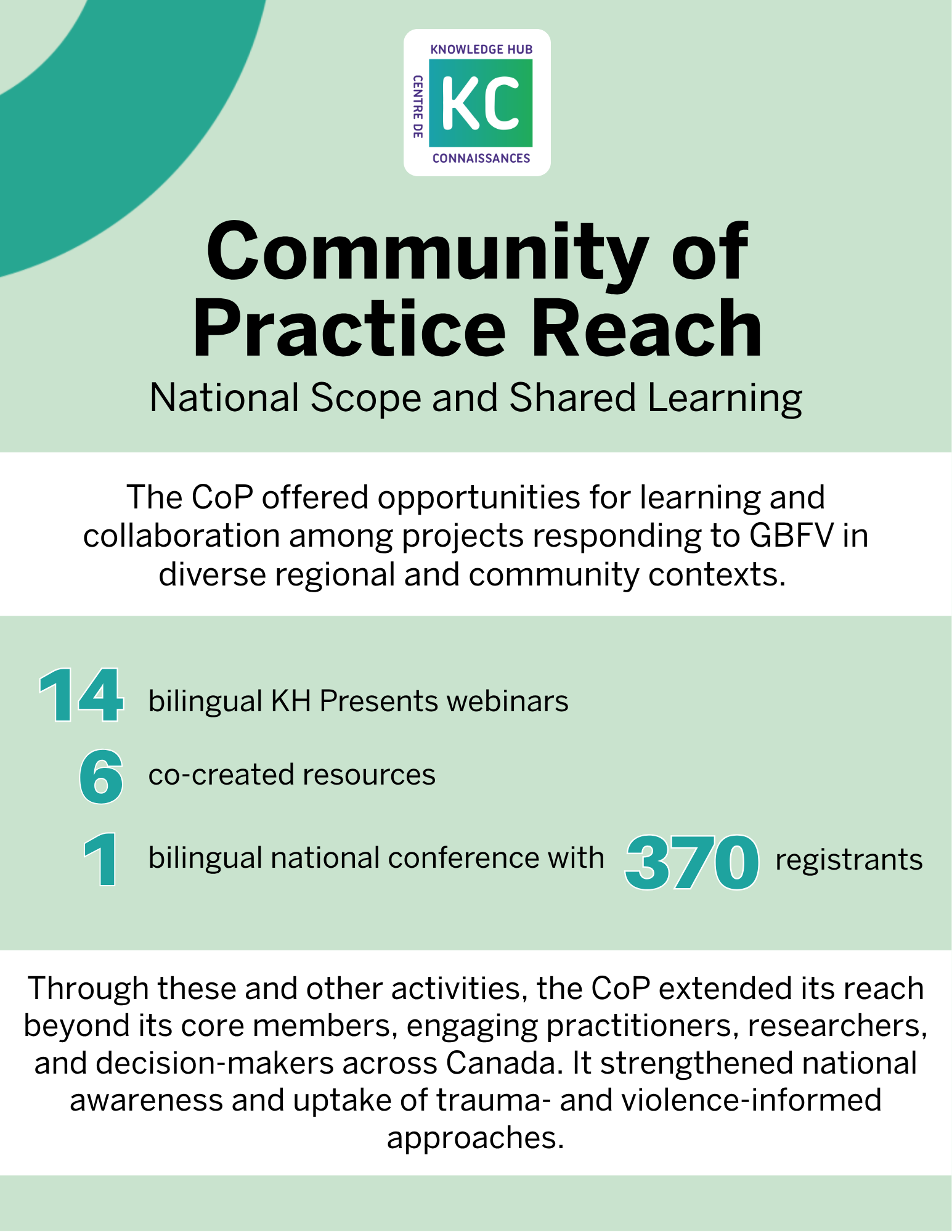
Through these and other activities, the CoP extended its reach beyond its core members, engaging practitioners, researchers, and decision-makers across the country. It strengthened national awareness and uptake of trauma- and violence-informed approaches.
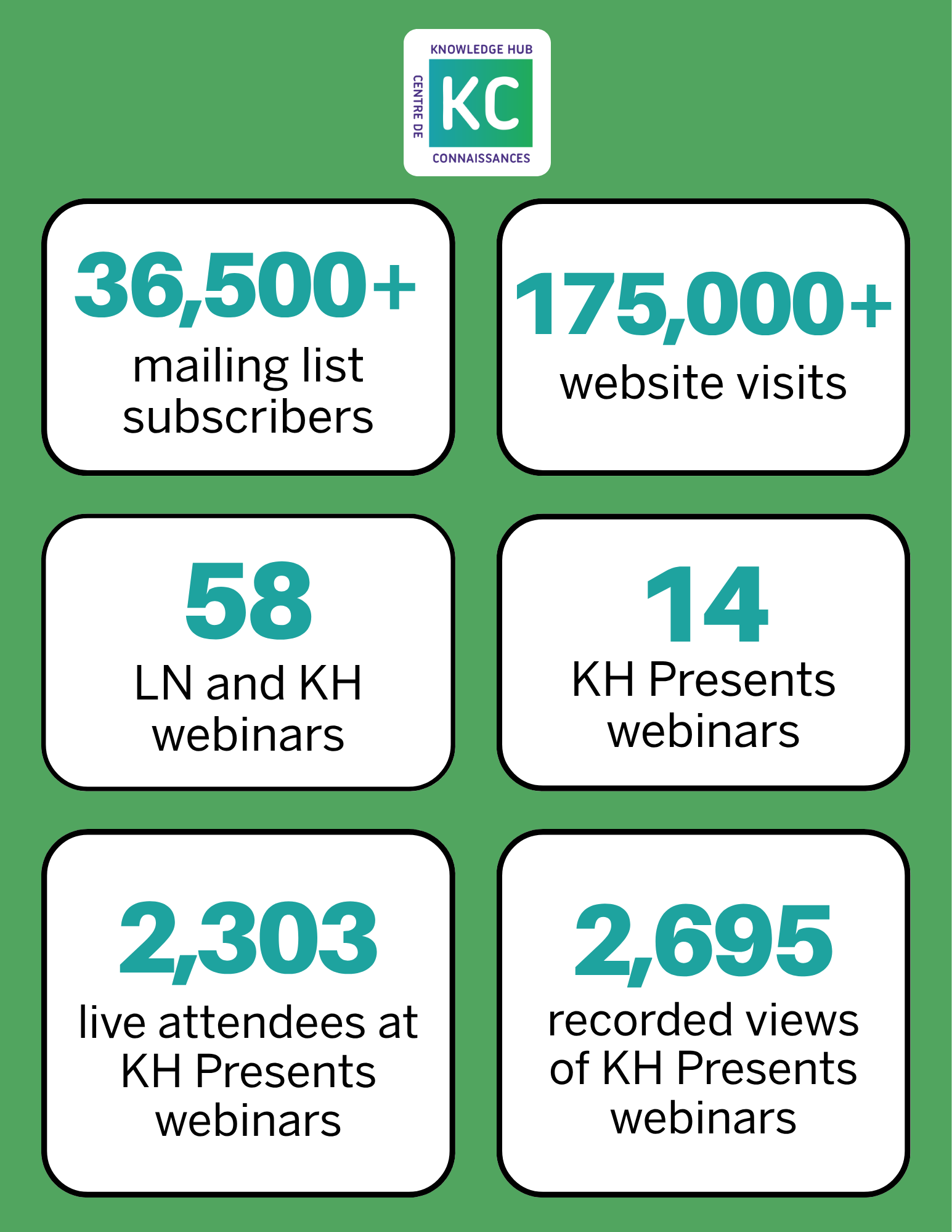
More than 175,000 website visits in the past four years, 36,500+ mailing list members, 2303 live webinar attendees for the 14 KH Presents webinars, 2695 views of 14 recorded KH Presents webinars, and 58 LN/KH webinars.
FROM PREVENTION TO INTERVENTION - Impact Across the Lifespan
CoP projects addressed GBFV across the continuum, from prevention and early intervention to response and recovery, supporting individuals and families across the lifespan, and providing training and skill development for GBFV workers.
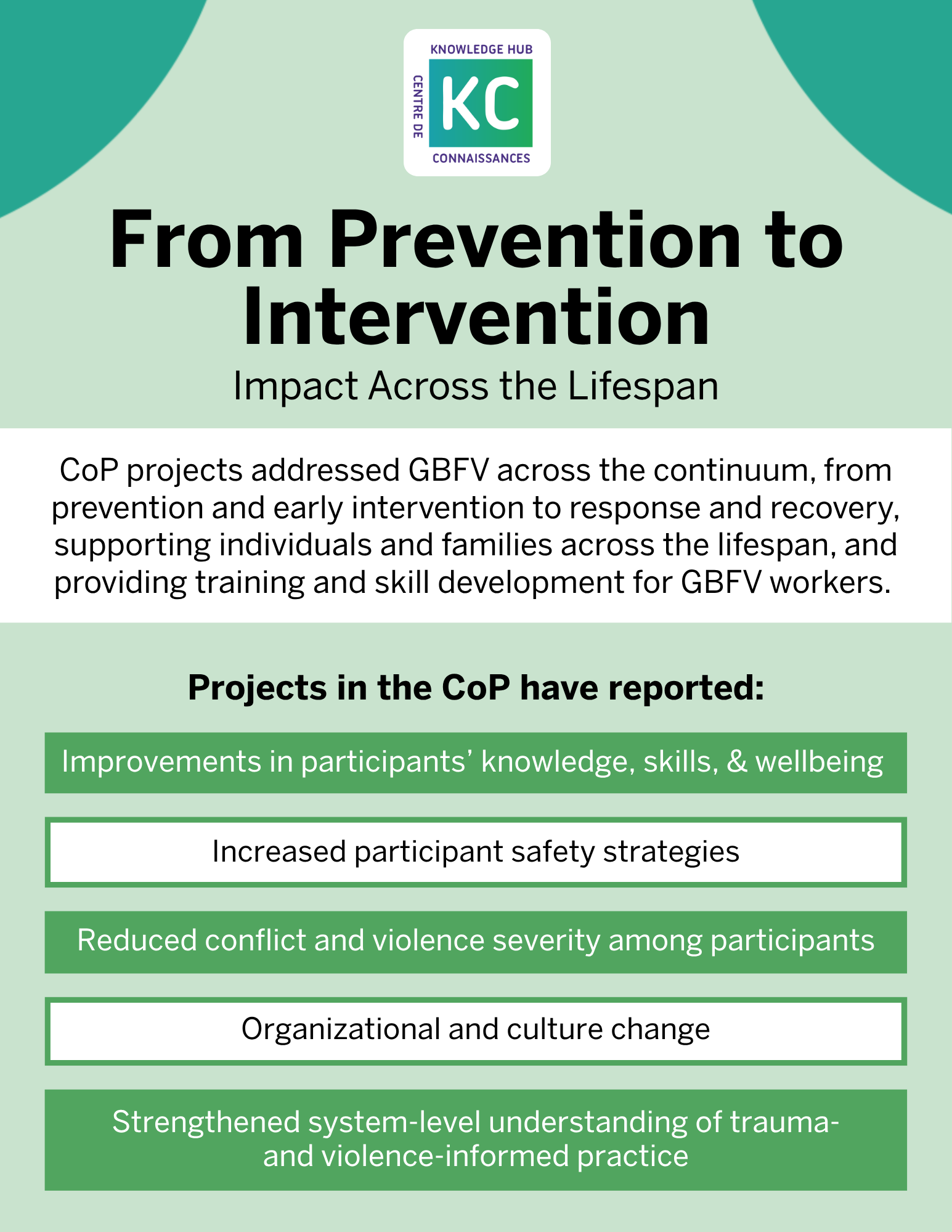
Projects in the CoP have reported:
- Improvements in participants’ knowledge, skills, and wellbeing
- Increased participant safety strategies
- Reduced conflict and violence severity among participants
- Organizational and culture change
- Strengthened system-level understanding of trauma- and violence-informed practice
INCLUSIVITY - Equity, Diversity, and Accessibility
Projects engaged culturally, linguistically, and geographically diverse communities across Canada, supported by bilingual (English/French) knowledge exchange and trauma- and violence-informed facilitation by the Knowledge Hub team.
Together, these efforts supported more equitable and culturally responsive approaches across Canada.
COLLABORATION - Collective Learning and Capacity-Building
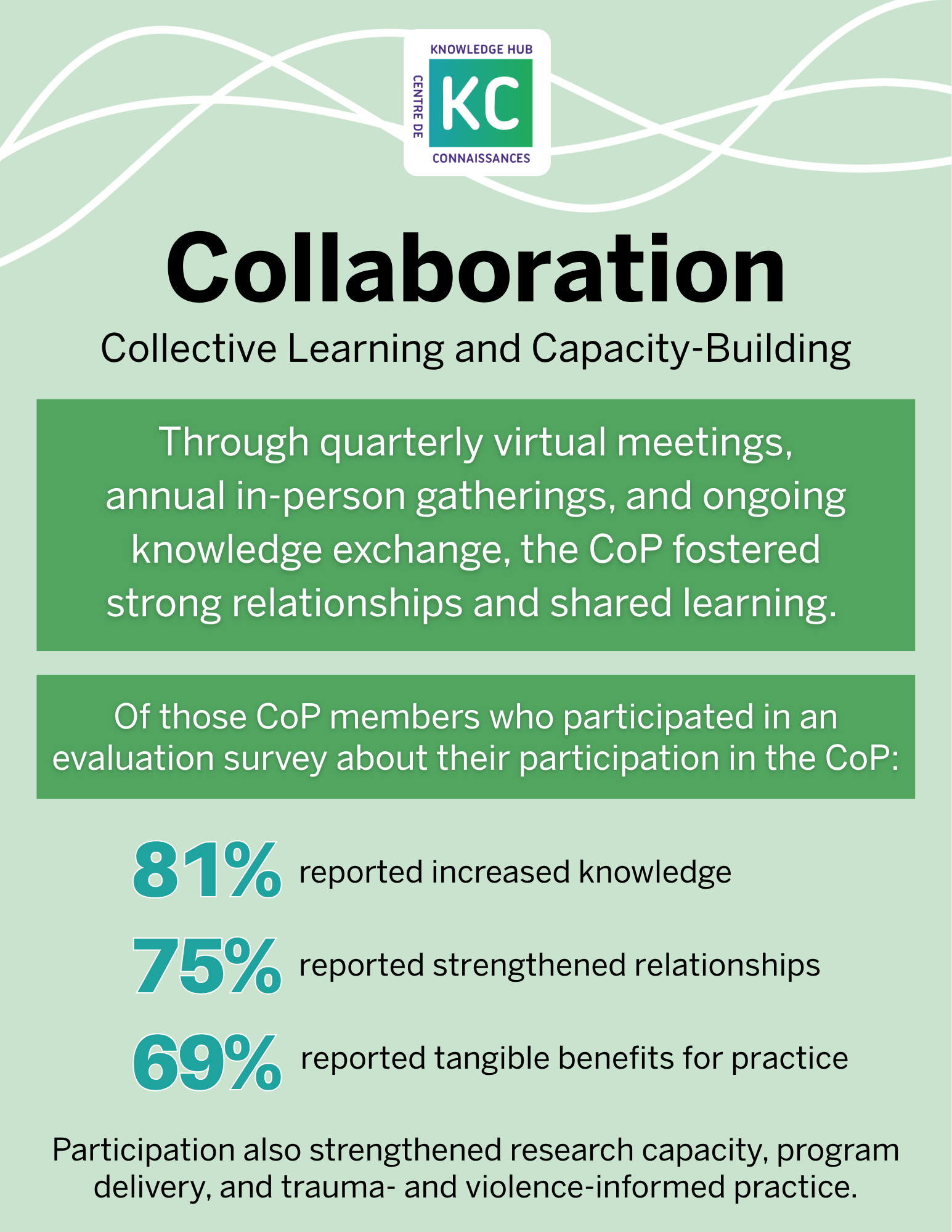
Through quarterly virtual meetings, annual in-person gatherings, and ongoing knowledge exchange, the CoP fostered strong relationships and shared learning. Of those CoP members who participated in an evaluation survey about their participation in the CoP:
- A repository of projects and co-created resources is maintained by the Knowledge Hub
- New collaborations and partnerships continue to be developed
Participation also strengthened research capacity, program delivery, and trauma- and violence-informed practice.
SUSTAINABILITY - Endurance Beyond the Investment
CoP members developed lasting relationships, shared language, and collective capacity.
- 75% reported strengthened relationships
- 81% reported increased knowledge
- 69% reported tangible benefits for practice
The lessons, tools, and partnerships developed through the CoP will continue to shape practice across the country.
ACTION - Collective Momentum Forward
The CoP demonstrated the value of collective action in advancing trauma- and violence-informed approaches to GBFV prevention.
Shared learning strengthened calls for sustained funding, cross-sector collaboration, and continued national leadership, leaving a legacy that will continue to shape practice and policy.
Sustainability Report
Sustainability remains a challenge in Canada’s efforts to address gender-based and family violence (GBFV). The “Advancing trauma- and violence-informed responses to gender-based and family violence: An exploration of sustainability” report, authored by members of the Knowledge Hub team, examines sustainability across two cycles of a Public Health Agency of Canada (PHAC) investment: the 2015–2022 Supporting the victims of domestic violence and child abuse through community programs cycle and the 2022–2026 Preventing and addressing family violence: The health perspective cycle. Our analysis draws from multiple data sources, including final reports from completed projects from the 2015–2022 funding cycle, interviews with project leaders from the 2015–2022 cycle three to four years after the end of funding, meeting notes and transcripts from sustainability Working Group meetings with representatives from the 2022–2026 cycle, and presentations about sustainability delivered by representatives from the 2022–2026 cycle. We explore the sustainability of these funded programs across four sustainability domains —
- sustained outcomes for program clients;
- sustained implementation of program (components);
- sustained knowledge and skills for program staff and professionals;
- sustained relationships, collaboration, and capacity for organizations;
— which all require stable sources of funding. These domains might be useful to future researchers and program leaders seeking to plan for and assess the sustainability of GBFV and other health-related programs. We also make recommendations for PHAC and other funders related to fostering systemic change towards sustainable funding of effective public health initiatives and to working within current funding systems.
Access the Sustainability ReportUpdates from Community of Practice Members
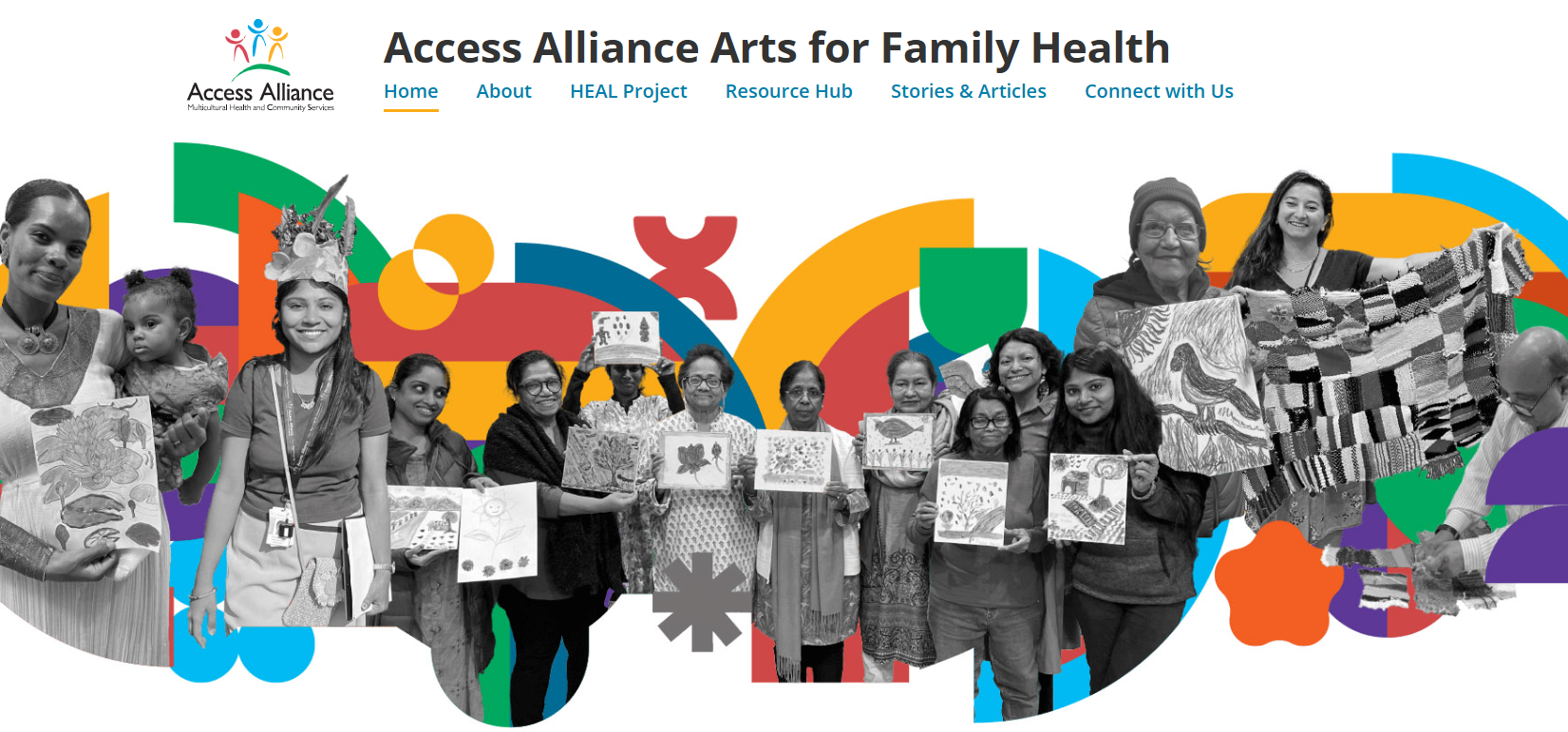
HEAL Project Launches New Website
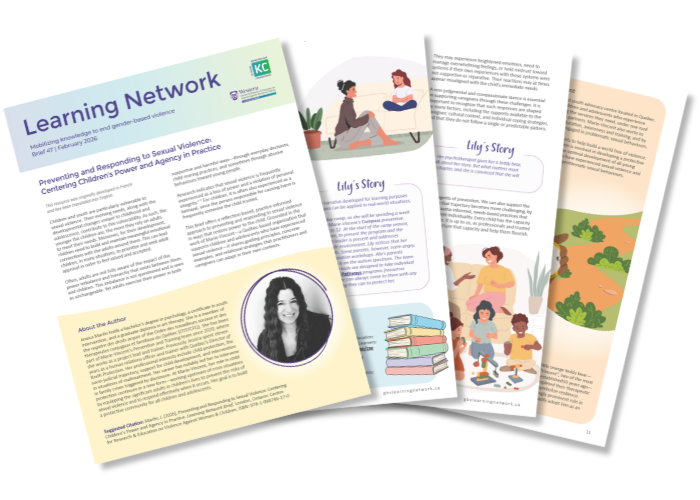 Compass Project Collaborates with Learning Network and Knowledge Hub on Resource Related to Child Sexual Abuse Prevention
Jessica Martin from Marie Vincent collaborated with the Learning Network and Knowledge Hub to produce a new resource: Prevention and Response in the Context of Sexual Violence: Centering Children’s Power and Agency in Practice. “This brief offers a reflection-based, practice-informed approach to preventing and responding to sexual violence in ways that restore power to the child.” It shares guiding principles, concrete examples, and relational strategies that caregivers and practitioners can adapt in their own contexts.
Mary Motz Speaks on Ontario Today
Mary Motz was a guest speaker on an episode of Ontario Today with CBC Radio on November 27, 2025. Generational family dysfunction: What does it take to be a cycle breaker? examined breaking the cycle of harmful behaviours passed down through families.

The STEP Project Launches Online ASTRA Training Program

“ASTRA” is the only training course in French to address trauma-informed approaches during perinatal care for people who have experienced childhood interpersonal trauma. The program is completely online, asynchronous, and takes about 4 hours to complete.
Kara Brisson-Boivin Interviews with CBC
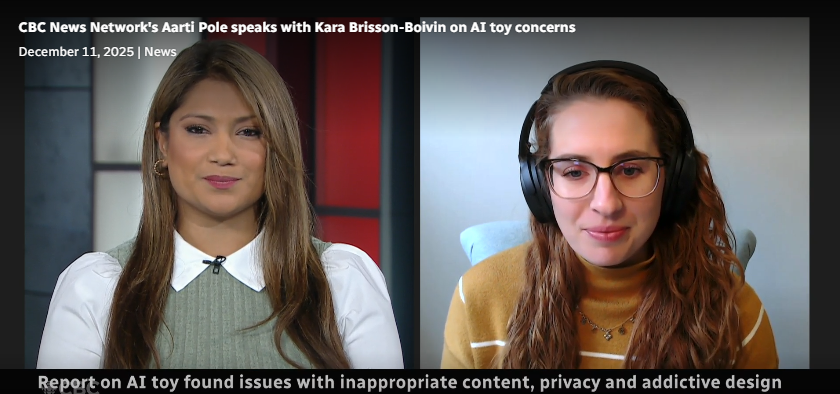
Congratulations to our Community of Practice member Kara Brisson-Boivin on her recent appearance on CBC News Network, speaking with Aarti Pole about growing concerns surrounding AI-powered toys.
As emerging technologies move faster than regulatory and protective frameworks, this conversation highlights the urgent need for critical reflection on privacy, children’s safety, and the broader social implications of so-called “smart” technologies.
Thank you, Kara, for contributing to this important public dialogue and for continuing to advance thoughtful, ethical, and youth-centred perspectives in digital policy discussions.
Knowledge Hub to Facilitate New Community of Practice for Projects Addressing Child Maltreatment
The Knowledge Hub at the Centre for Research & Education on Violence against Women & Children (Western University) has been awarded funding from the Public Health Agency of Canada to facilitate a new CoP with projects preventing and addressing child maltreatment. This new CoP will work with 26 projects across Canada between 2026 and 2031.