
Connections for Breaking the Cycle (C-BTC) of Violence
The first years of life are critical periods for intervention and prevention to break the cycle of violence in relationships across the lifespan.1,2 The attachment relationship is the mechanism through which intergenerational trauma is transmitted across generations.3,4,5 Supporting the healing of women and mothers affected by violence helps them protect their infants and young children from the experiences that caused their own pain, thereby breaking the cycle of violence.
The Connections Intervention
Connections is a six-week group intervention with trauma-informed and relational approaches designed to interrupt intergenerational transmission of interpersonal violence (IPV). Developed by the Breaking The Cycle program at the Canadian Mothercraft Society (Mothercraft), this intervention aimed to promote increased understanding of healthy interpersonal relationships and their importance to child development for marginalized IPV-exposed mothers.
This intervention manual is available in both English and French, as well as an adapted version for Aboriginal communities:
-
English
-
French
-
Aboriginal Version
The Building Connections Project (2016-2020)
The Canadian Mothercraft (Mothercraft) led the Building Connections project, a Public Health Agency of Canada (PHAC)-funded initiative from 2016 to 2020, aimed at enhancing community capacity to identify and respond to interpersonal violence affecting mothers with infants and young children. This initiative emphasized the importance of systematically engaging community partners across Canada with the necessary capacity, resources, and support systems to safely deliver and evaluate Connections.
Evaluation Reports
-
 What We Learned
 -
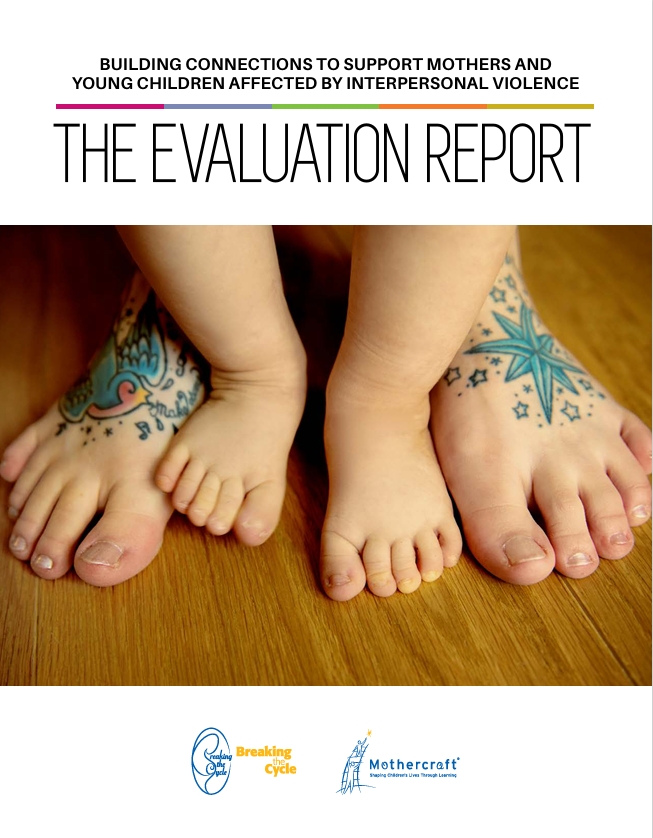 Technical Evaluation Report
The C-BTC Project (2021-Present)
Mothercraft has continued to scale up the implementation of Connections for mothers and children experiencing violence in relationships and its evaluation through the C-BTC project. C-BTC enhances access to an interpersonal violence group intervention for pregnant women and mothers of young children experiencing family violence through collaboration with community partners across Canada. Evaluation of C-BTC will help to increase the evidence base for Connections and its approaches, confirm its impact over time, and identify the mechanisms of change observed among pregnant women and mothers who participated in the intervention.
Community Partnerships
C-BTC is directed to pregnant women and mothers of young children (birth-6 years) attending Community Action Program for Children (CAPC), Canada Prenatal Nutrition Program (CPNP) and/or Aboriginal Head Start in Urban and Northern Communities (AHSUNC) projects in 14 communities across Canada.
Community Agencies Engaged in C-BTC
-
 Algoma Family Services
 -
 Breaking the Cycle, Mothercraft
 -
 Campbell River Family Services Society
 -
 Cape Breton Family Place Resource Centre
 -
 Community Connections Society of Southeast BC
 -
 ConnectWell Community Health
 -
 Elizabeth Fry Society
 -
 Kids First Association
 -
 Macaulay Centres for Children
 -
 Salvation Army, Bethany Hope Centre
 -
 Strides Toronto
 -
 Strive Niagara
 -
 Under One Sky Friendship Centre
 -
 YMCA of Greater Toronto
Project Design
Connections is the subject of rigorous intervention research to enhance the evidence base for the intervention. The C-BTC project has been disseminating knowledge and learning to a broad range of audiences locally, nationally, and internationally.
Regular activities conducted by this project, include:
- Certified Connections Facilitators Trainings
- Bi-weekly Community of Practice (CoP) Meetings
- Community Webinars
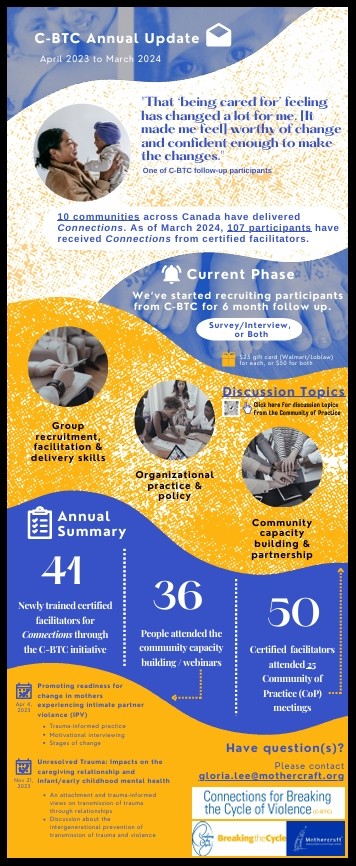
All C-BTC activities are evaluated, and their knowledge and learning outcomes are shared through various means (see Infographics below).
Study Progress (as of April 2025)
Certified Connections Facilitator Trainings
Certified Connections Facilitator Trainings have been offered regularly through the project timeline, supporting the delivery of Connections in the partnered communities across Canada. Each training course is evaluated to improve its delivery of concepts related to IPV and Connections.
CoP Meetings
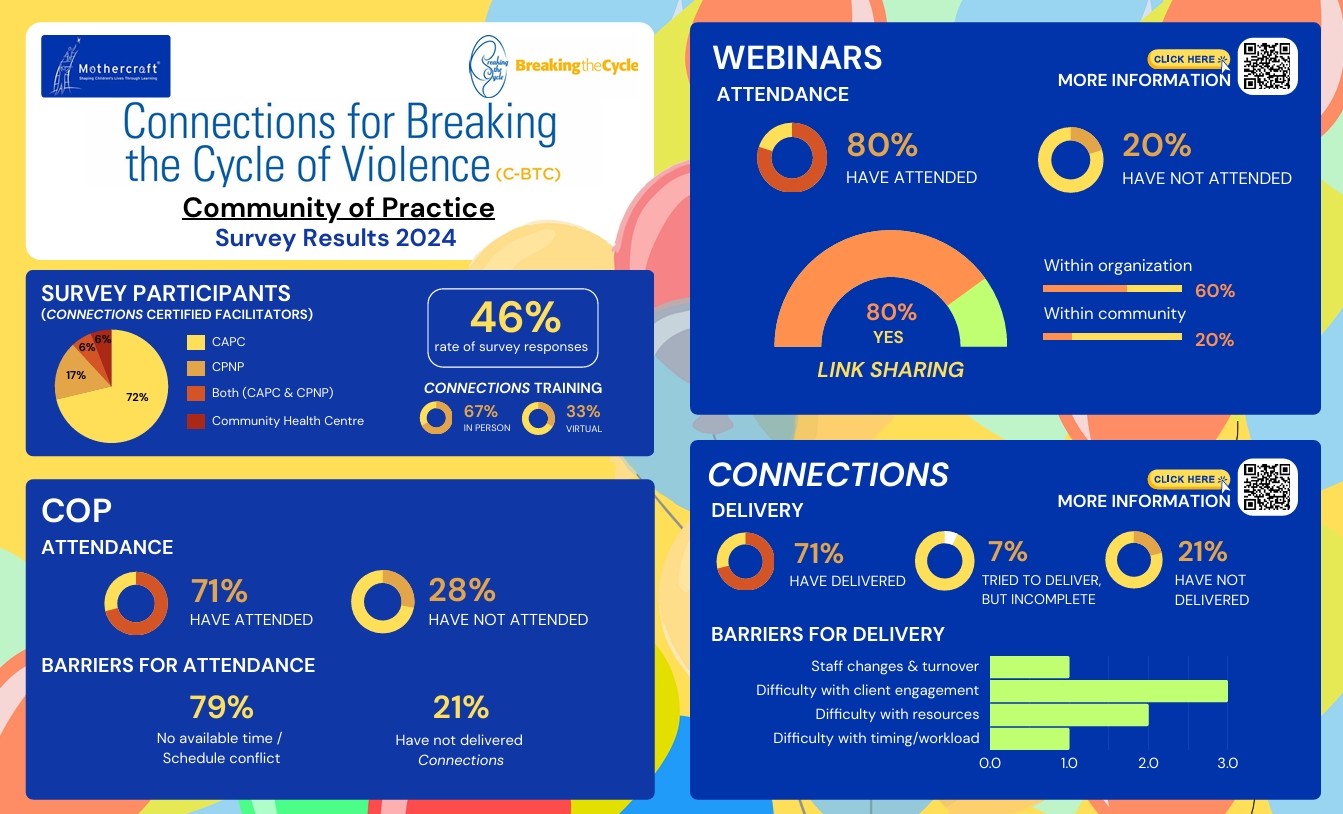
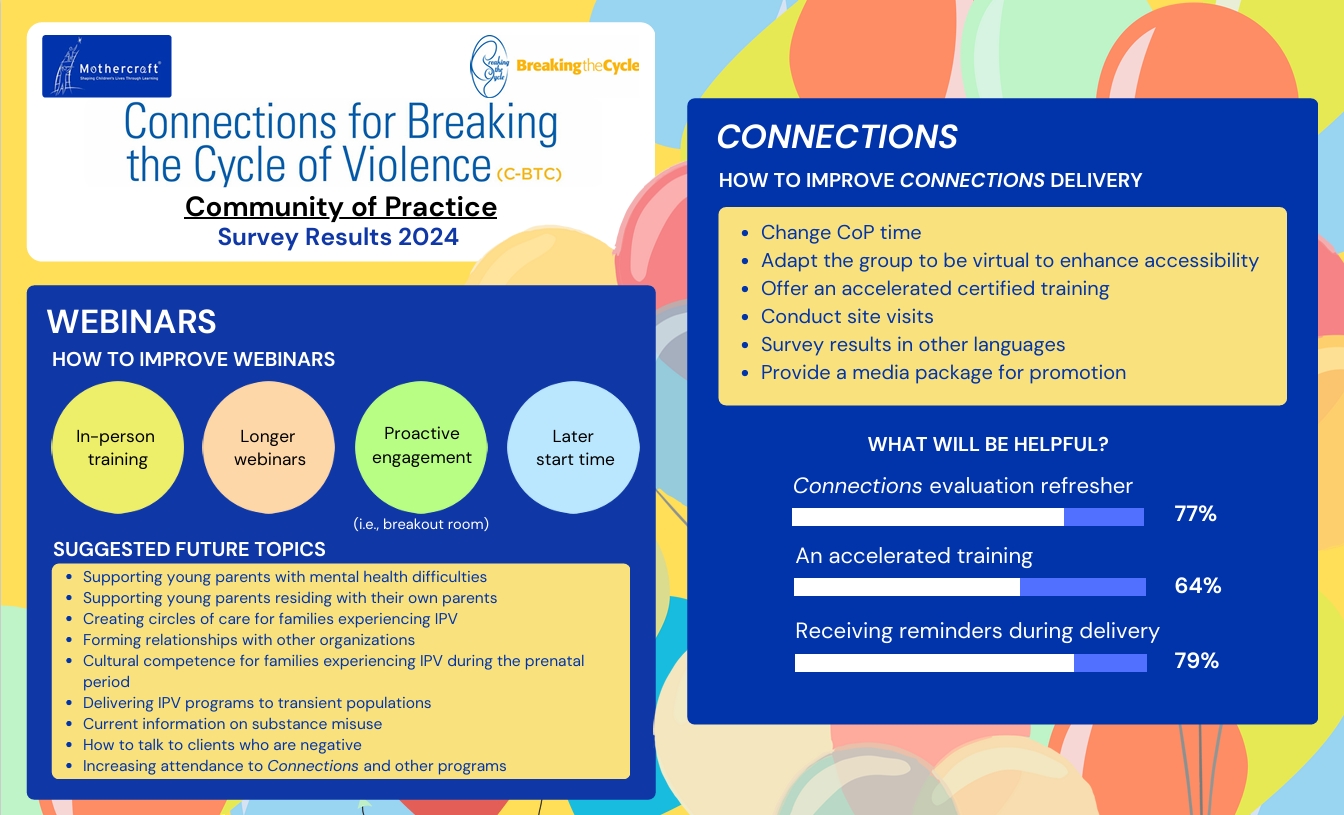
Virtual, bi-weekly CoP meetings are offered to staff from community partner agencies across Canada. Connections facilitators are invited to attend and have space to share their experiences of facilitating the group, debrief, reflection and access support. Through these meetings, community partners gain knowledge and insights on effectively supporting vulnerable populations they serve in Canada. They also discussed how to efficiently facilitate Connections to those experiencing IPV and assist them to achieve resilience and empowerment through this intervention. The C-BTC project has noted highlights from each meeting and regularly evaluated the facilitators’ needs based on their feedback from the CoP meetings.
The following infographics present various topics that Connections facilitators discussed throughout the C-BTC project:
Community Webinars
As part of the C-BTC project, external scholars and professionals have been invited to host virtual community webinars, discussing various topics related to supporting diverse backgrounds of populations and their mental health. Each webinar is evaluated to improve community understanding of disenfranchised populations, as well as to deepen the attendees’ knowledge and skills in supporting these populations.
The following C-BTC virtual community webinars present various topics regarding socially disadvantaged populations and effective support strategies for them:
Engaging South Asian Families
Promoting Readiness For Change In Mothers Experiencing Intimate Partner Violence
Supporting Parenting In The Digital Age
The Complex Art of Working With Black Families Understanding Their History and Trauma
The Many Uses of Harm Reduction in Addiction Counselling, Pregnancy, and Parenting Support
Unresolved Trauma Impacts on the Caregiving
Knowledge Mobilization
The C-BTC project has mobilized knowledge through various activities, including:
Webinars
Publications
Developing and testing a readiness tool for interpersonal violence prevention partnerships with community‐based projects.
A National Implementation of a Community-Based Intervention for Mothers Experiencing Violence in Relationships.
A Qualitative Examination of Mothers’ Experiences in an Interpersonal Violence Intervention Initiative.
Research and Evaluation with Community-Based Projects: Approaches, Considerations, and Strategies.
Perceived Pathways of Change in an Interpersonal Violence Intervention for Mothers: The Importance of Self-Compassion
Trauma-informed and relational approaches to service provision: building community-based project capacity to respond to interpersonal violence through a national initiative.
Building Connections: Supporting the Readiness and Capacity of Community-Based Projects to Deliver a Trauma-Informed Intervention.
Conference Presentations
Evaluating a national initiative to end the cycle of violence for mothers and their children.
Connections and Self-Compassion: How mothers heal from Interpersonal violence.
Connections for Breaking the Cycle (C-BTC) Project [Poster Presentation].
Giving and receiving warmth, love, and care: Women’s processes of change in an interpersonal violence intervention.
Community of Practice Members
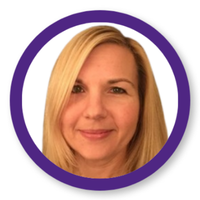
Dr. Mary Motz is a Clinical Psychologist at Mothercraft’s Breaking the Cycle program in Toronto and an Adjunct Faculty in the Department of Psychology at York University. Since obtaining her degree in clinical-developmental psychology at York University in 2003, she has been working with pregnant people, mothers, as well as their infants andyoung children who are at risk for maladaptive outcomes because of challenges related to substance use and mental health difficulties, interpersonal violence and trauma, marginalization by society and systemic violence, and poverty.
In collaboration with internal and community research partners, Dr. Motz has led the program evaluation and research at BTC, including Connections for Breaking the Cycle (C-BTC), and has supervised numerous research and clinical practicum students. Dr. Motz has authored numerous academic publications and technical reports, as well as provided training nationally and internationally related to promoting healthy infant and child development, supporting children with Fetal Alcohol Spectrum Disorder, and providing trauma-informed interventions for families with infants and young children who have complex needs.
Bhupinder Heer
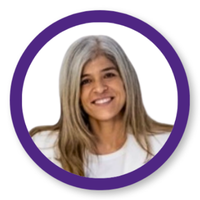
Bhupinder Heer is a Registered Social Worker and Director of Child and Family Services at the Canadian Mothercraft Society and her portfolio includes leading and overseeing the early childhood programs and services which includes Breaking the Cycle Program and Connections for Breaking the Cycle Program (C-BTC). She is a Registered Social Worker with the Ontario College of Social Workers and Social Service Workers (OCSWSSW).
Bhupinder has over 25 years of experience in children’s mental health clinical service delivery, early childhood development, early identification, early intervention and prevention for families and young children. She has extensive experience fostering strategic partnerships and engaging in system-level collaborations to ensure services meet the needs of children and families, are better integrated and rooted in evidence to ensure quality.
Bhupinder is the recipient of the 2018 Mary Neville Award, in recognition of her clinical leadership and commitment to inclusion, collaboration and early identification which supported to enrich Peel Region’s child and youth mental health system as well as the 2008, National Health Service, UK, Collaboration and Partnership Award.